
For any business, marketing is the bridge between a great product and the customer who needs it. But for small business owners, building that bridge presents a unique challenge. While large corporations can afford to saturate the airwaves with million-dollar campaigns, small enterprises must rely on strategy, agility, and precision.
You do not need a Super Bowl budget to compete; you simply need to be smarter with the resources you have. Marketing is not just about spending money; it is about creating a system that generates awareness, builds trust, and ultimately drives sales.
Table of Contents
Marketing vs. selling. The distinction
Many entrepreneurs conflate marketing with selling, but understanding the difference is critical to your success. Selling is the transaction, the moment money changes hands. Marketing is everything that happens before that moment.
Think of marketing as “matchmaking.” It is the art of identifying your ideal customer and introducing them to your brand in a way that solves a problem they already have. Effective marketing warms up the lead so that by the time they reach the sales phase, they are already convinced of your value.
Furthermore, marketing plays a vital defensive role. In a crowded marketplace, silence is dangerous. Continuous marketing reminds your existing customers that you are still the best option, reinforcing your brand identity and insulating your business against competitors.
Why research beats guesswork
Before spending a penny on ads, you must invest in understanding your landscape. This isn’t just best practice; it is the industry standard for success. According to a survey by GreenBook, 96% of marketers agree that market research is valuable and necessary for their business. Why? Because acting on assumptions is the fastest way to burn through a limited budget.
Research does not require expensive consultancy firms. It starts with looking at your current best customers. Who are they? What specific problem did you solve for them? Why did they choose you over a cheaper competitor? This data is gold. In fact, studies show that prospects who share the profile of your existing best customers are eight times more likely to convert than cold leads.
By asking these questions, you move from “hoping” people find you to strategically placing your brand exactly where your ideal customers are looking.

The market is unforgiving to those who guess. Harvard Business School professor Clayton Christensen estimates that 95% of new products fail. Even more telling is why they fail: a comprehensive study of 101 startup post-mortems found that 42% failed simply because there was “no market need” by CB Insights.
In other words, nearly half of these businesses built a product nobody wanted because they didn’t do the research first.
Building your digital ecosystem. Modern marketing
Modern marketing is not about picking one channel and hoping for the best; it is about building an ecosystem where different channels reinforce one another.
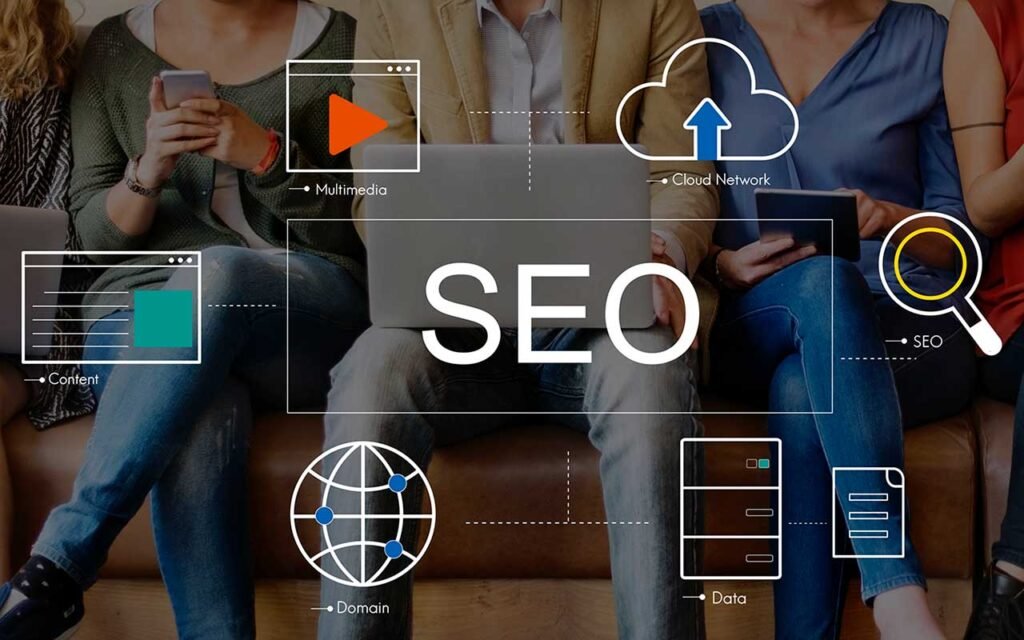
The digital storefront – In today’s economy, your website is often the first and only impression a customer gets of your business. It must be more than just a digital brochure; it is your 24/7 salesperson. With over 90% of online experiences beginning with a search engine, your site must be built on a foundation of SEO.
However, visibility is nothing without usability. Google prioritizes mobile-first indexing, meaning if your site is difficult to navigate on a smartphone, you are effectively invisible. A fast, responsive, and user-centric website is the hub that all your other marketing activities will point toward.
The conversation – Once you have a platform, you need a voice. Social media allows you to project your brand’s personality and engage with your audience on their terms. With global digital ad spending projected to reach $605 billion by 2024, it is clear that this is where the attention lives.
But remember: social media is “rented land.” Algorithms change, and reach can drop overnight. This is why smart businesses use social media to feed their email marketing. Email remains one of the few channels you fully own.
By offering value, such as exclusive insights, discounts, or helpful content, in exchange for an email address, you build a direct line of communication. This allows for “nurture campaigns” that keep your brand top-of-mind without relying on social media algorithms.
The local advantage – Small businesses possess a superpower that large corporations lack: genuine connection. Local SEO (like optimizing your Google Business Profile) ensures you appear when local customers are searching for immediate solutions.
Beyond the digital realm, physical presence at events, fairs, or local partnerships allows for human connection. The goal here is not just to hand out flyers, but to gather data. A creative activation at a local event that captures email addresses can fuel your digital marketing for months to come.
The evolution of reputation
Word of mouth” has long been the holy grail of small business growth, but today, word of mouth has gone digital. It is now known as Online Reputation Management.
With 91% of consumers between the ages of 18 and 34 trusting online reviews as much as personal recommendations [Source: BrightLocal], you cannot leave this to chance. You must actively manage your reputation by automating requests for reviews and, crucially, responding to them. How you handle a negative review often tells a prospect more about your integrity than a five-star rating does.
Pro Tip: The "review mining" strategy. Stop using industry jargon. Instead, scan your competitors' Google Reviews to find the exact words customers use to describe their problems.
Strategic planning and budgeting
A marketing strategy without a budget is simply a wish list. To see real growth, you must treat marketing as an investment, not an expense.
Data suggests that small businesses allocating more than 10% of their revenue to marketing see a revenue growth of 9.7%, compared to just 4% growth for those who spend less. However, how you spend is just as important as how much.
A budget needs a destination. This is where the SMART planning framework becomes your most valuable tool. It forces you to translate vague ambitions into concrete roadmaps.
Specific: Don’t say “I want more sales.” Say “I want to sell 50 more units of Product X.”
Measurable: If you can’t track it, don’t do it. Ensure you have Google Analytics or CRM tracking in place before you launch.
Achievable: Be realistic. If you have a £500 budget, aiming for national TV exposure is a recipe for disappointment.
Relevant: Does this goal actually help the business? Getting 10,000 likes on a meme might feel good, but if it doesn’t drive revenue, it’s a vanity metric.
Time-bound: A goal without a deadline is just a dream.
Marketing for a small business is a marathon, not a sprint. It requires a consistent, integrated approach where your website, content, and reputation work together to build momentum.
By understanding your audience, investing in your digital foundation, and managing your budget with precision, you can build a marketing engine that doesn’t just compete with the big players, but outmaneuvers them. Start small, measure everything, and let your results dictate your next move.