
In 2026, digital marketing is no longer a bolt-on luxury for small businesses; it is the engine of commerce. For local service providers, independent retailers, and niche consultants, the digital landscape has shifted from a place of mere visibility to a rigorous environment of search intent and lead generation.
The days of simply having a website and a Facebook page are behind us. Today, success requires a cohesive strategy that connects your brand to the customer exactly when they are looking for you. This introduction serves as a foundational guide for small business owners ready to move beyond “posting and hoping” toward a structured, data-driven approach.
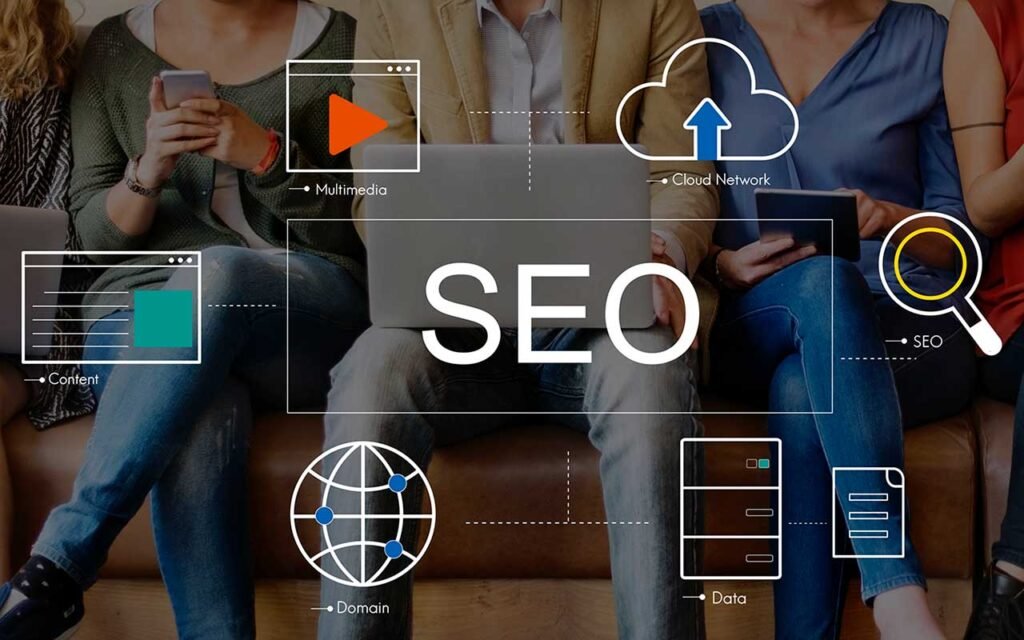
By understanding the core pillars of digital marketing such as Search Engine Optimization (SEO), Content Strategy, and Paid Acquisition, you can build a system that not only reaches new audiences but converts them into loyal clients.
Table of Contents
The foundation: your website
Many small business owners make the mistake of viewing their website as a digital brochure. In reality, your website should be your hardest-working salesperson, operating twenty-four hours a day. It is the hub where all other marketing efforts eventually lead. If the hub is not optimized to convert visitors into leads, every hour and dollar spent on social media or advertising is wasted efficiency.
A high-performance website prioritizes user experience and speed. When a potential customer lands on your page, they typically have a specific problem they need solving immediately.
Whether they are looking for a septic tank or a plumber in a specific location, they need to see within seconds that you are the solution. This means having clear, accessible “Calls to Action” (CTAs). A phone number buried in a footer or a contact form that asks for too much information creates friction. Instead, effective sites use prominent buttons like “Get a Quote” or “Book a Free Consultation” placed visibly above the fold.
Furthermore, your website must be mobile-first. The majority of local searches now happen on smartphones. If your site is slow to load or requires “pinching and zooming” to read text, users will bounce back to Google and choose a competitor. A mobile-optimized site not only pleases the user, but is also a critical ranking factor for search engines.
Search engine optimization (SEO): Being found when it matters
SEO is the process of aligning your online presence with the questions your customers are asking. It is not about tricking an algorithm; it is about providing the best answer to a user’s query. For small businesses, particularly those serving a specific geographic area, “local SEO” is the most powerful tool in your arsenal.
Local SEO focuses on capturing the intent of nearby customers. When someone searches for “[service] near me,” Google relies on specific signals to decide who to rank. The most critical of these is your Google Business Profile.
A fully optimized profile, complete with up-to-date hours, accurate contact details, and high-quality photos, signals to Google that your business is active and trustworthy. Regular reviews from satisfied clients further cement this trust, acting as social proof that encourages new customers to choose you over a competitor.

Beyond your profile, your website content must speak the language of your customers. This involves keyword research, identifying the specific phrases people use when looking for your services. Rather than guessing, successful businesses use data to find out if customers are searching for “[service]” or “[service – long tail + location].”
By weaving these specific terms naturally into your website’s headers, descriptions, and blog posts, you effectively raise your hand when a customer asks a question, telling search engines, “I have the answer right here.”
Content marketing: Building authority and trust
If SEO is about being found, content marketing is about being chosen. Once a visitor arrives at your site or social profile, you need to demonstrate expertise. Content is the vehicle for this demonstration. For a small business, this doesn’t necessarily mean writing daily blog posts; it means creating resource-rich assets that solve problems.
Effective content marketing answers the “fears and frustrations” of your audience. A potential homebuyer might be worried about damp issues or structural cracks. An article or short video explaining how to identify these risks establishes you as an authority before a transaction ever takes place. This approach builds “know, like, and trust”, the three psychological hurdles every customer must jump before making a purchase.
The power of video
Short-form video has emerged as a dominant force in content marketing. Platforms like YouTube Shorts and TikTok are now functional search engines where users look for quick, visual answers. A thirty-second video explaining a complex topic is often more valuable to a user than a long-winded article.
Educational Clips: Breakdown complex industry jargon into simple terms.
Behind-the-Scenes: Show the reality of your work to build authenticity.
By consistently publishing helpful content, you remain “top of mind.” Even if a customer isn’t ready to buy today, they will remember the helpful guide or video they saw when the time comes to make a decision.
Pro Tip: Short-form video is emerging as a dominant face in content marketing, and should be used in your efforts as a business. By consistently publishing helpful content, you remain on "top of your client mind".
Paid advertising: Accelerating growth
While organic growth through SEO and content is sustainable, it is also a long game. Paid advertising, such as Google Ads or Meta (Facebook/Instagram) Ads, acts as an accelerant. It allows you to buy your way to the front of the line, guaranteeing visibility for specific keywords or demographics.
For service-based businesses, Google Ads are particularly effective because they target “high intent” users. A person searching for “emergency locksmith” has an immediate need and is likely to convert quickly. By bidding on these specific keywords, you ensure your business appears at the very top of the search results, capturing that demand instantly.
Social media advertising, on the other hand, is excellent for generating demand where it didn’t previously exist. You can target users based on their interests, behaviors, and demographics. For example, you could show an ad for a “First Time Buyer’s Guide” specifically to people aged 25-35 in your local area. This “interruption marketing” introduces your brand to potential customers who may not have realized they needed your services yet.
Email marketing: The retention engine
The final piece of the digital marketing puzzle is retention. It is far cheaper to retain an existing client than to acquire a new one. Email marketing remains the most direct and effective channel for maintaining relationships. Unlike social media algorithms, which decide who sees your content, email lands directly in your customer’s inbox.
Building an email list starts with a value exchange. Customers rarely give up their email address for a newsletter; they exchange it for something of value, such as a discount code, a free eBook, or an exclusive checklist. Once they are on your list, you can nurture them with regular updates, helpful tips, and exclusive offers.
For a business like a service practice or a lead generation site, email marketing can be used to keep partners engaged or to follow up with leads who haven’t yet converted. Automated email sequences can send a series of helpful messages over a few weeks, gently guiding the prospect back to your website to complete their purchase.
Digital marketing for small businesses is not about mastering every platform or chasing every trend. It is about building a cohesive ecosystem where each part supports the others. Your SEO efforts drive traffic to your website; your content builds trust with that traffic; paid ads accelerate the volume of visitors; and email marketing nurtures those relationships over time.
By focusing on these core pillars and executing them with consistency and clarity, small business owners can take control of their growth. The goal is to move away from reliance on word-of-mouth luck and towards a predictable, scalable system that delivers results month after month.
Please feel free to contact us if you need advice, a free audit or someone to help you with your brilliant business, no matter if you a just started as a trader or you are an established manufacturer.